When people ask, what is digital marketing, they are usually looking for a clear explanation of how businesses promote products and services online. In today’s connected world, everyone spends hours scrolling through smartphones, checking email, or browsing search engines. Because consumer attention has shifted to the internet, companies must adapt.
Understanding what is digital marketing goes far beyond just building a website. Whether you run a local storefront or a global enterprise, mastering this discipline is essential for survival and long-term growth. This comprehensive guide breaks down the core concepts, channels, and execution strategies behind modern online campaigns.
Defining the Core Concept: What Is Digital Marketing?
At its simplest, what is digital marketing boils down to any promotional effort that utilizes electronic devices and the internet. Businesses leverage digital channels such as search engines, social media platforms, email, and websites to connect with current and prospective customers.
This broad definition encompasses everything from automated email newsletters to targeted social media video ads and organic search results.
Digital Marketing vs. Traditional Marketing
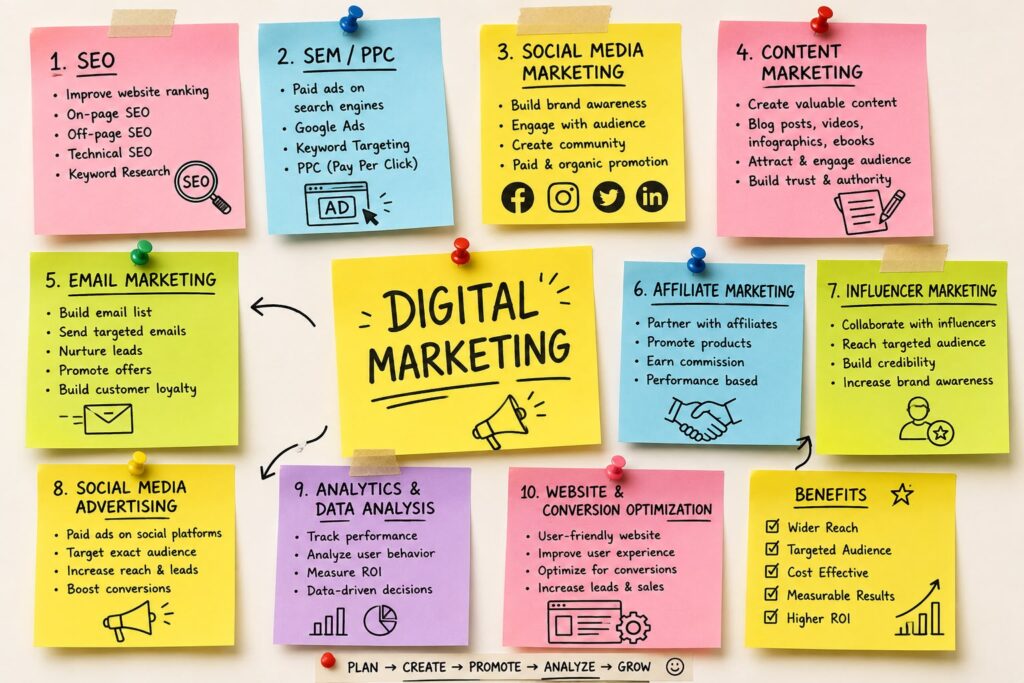
To fully comprehend what is digital marketing, it helps to contrast it with traditional offline marketing methods like television commercials, radio spots, and billboards.
Traditional advertising relies on broadcasting a message to a broad audience. It is notoriously difficult to measure exact returns, and you cannot easily filter out uninterested viewers. Conversely, digital marketing offers precise tracking, real-time analytics, and advanced audience segmentation. You can see precisely how many people clicked an ad, viewed a page, or completed a purchase.
Why Modern Enterprises Rely on Online Promotion
As businesses explore what is digital marketing, they quickly realize its immense value over legacy advertising models. Key advantages include:
-
- Global Reach with Local Targeting: You can market products to international buyers or restrict your promotions to a strict 5-mile radius around your physical shop.
-
- High Cost-Effectiveness: Small businesses can launch targeted campaigns on social media for a fraction of the cost of print or TV ads.
-
- Measurable ROI: Advanced analytics dashboards eliminate guesswork, showing exact performance metrics for every dollar spent.
-
- Precise Audience Segmentation: Instead of wasting money on uninterested audiences, you can target users based on specific demographics, behaviors, and search history.
Core Channels to Know
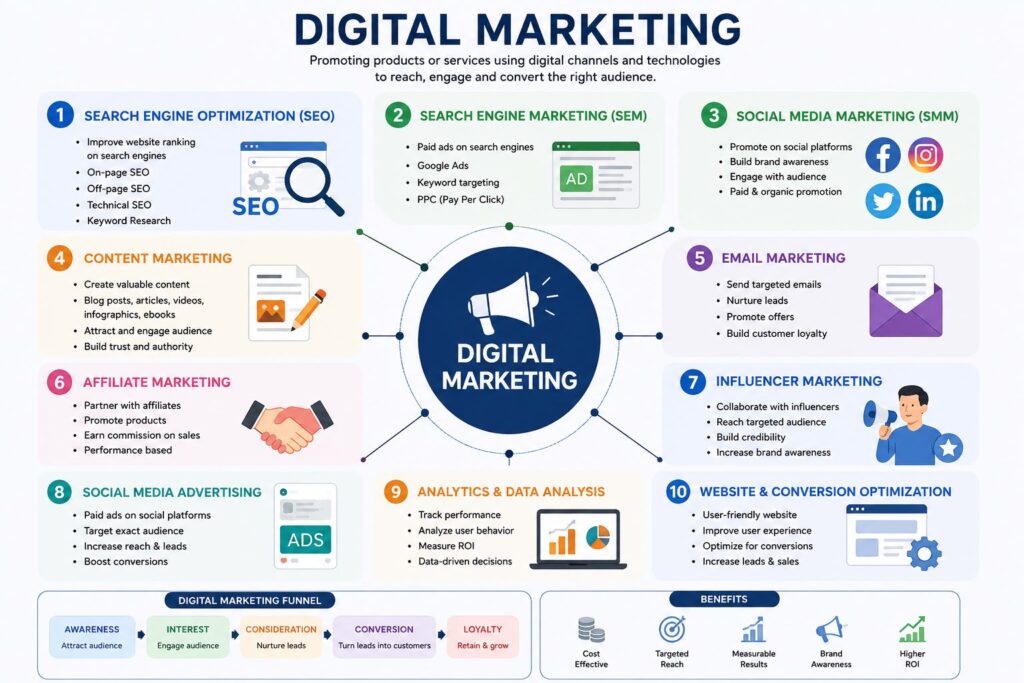
Any deep dive into what is digital marketing requires looking at the primary channels professionals use to build visibility:
1. Search Engine Optimization (SEO)
SEO focuses on optimizing your website pages so they rank higher in organic search results on platforms like Google. By targeting specific terms, such as asking what is digital marketing, informational pages can attract consistent, free traffic over time.
2. Content Marketing
Content marketing involves publishing valuable blog posts, whitepapers, infographics, and videos. Instead of aggressive sales pitches, you answer user questions and build foundational trust.
3. Social Media Marketing (SMM)
Brands utilize platforms like Instagram, LinkedIn, TikTok, and Facebook to build communities, share updates, and increase brand affinity.
4. Pay-Per-Click (PPC) Advertising
PPC models charge advertisers a fee only when a user clicks their ad. Google Ads and social media sponsored placements are prime examples of this model.
5. Email Marketing
Email remains one of the highest-converting channels available. It allows brands to nurture leads, announce promotions, and maintain direct communication.
How to Build a Winning Strategy
Implementing a strategy based on what is digital marketing requires a structured, step-by-step framework:
-
- Define Clear Objectives: Establish whether your primary goal is lead generation, brand awareness, or direct online sales.
-
- Identify Your Target Audience: Create detailed buyer personas mapping out customer pain points, age brackets, and online habits.
-
- Allocate Your Budget: Balance spending between paid advertising (PPC) and long-term organic strategies (SEO and content creation).
-
- Select Your Channels: Focus your energy on two or three channels where your specific audience spends most of their time.
-
- Analyze and Optimize: Routinely track performance metrics using analytics tools to refine your campaigns and maximize returns.
Conclusion
Ultimately, answering what is digital marketing reveals it to be the most versatile tool available for modern brand growth. By embracing data-driven strategies, precise audience targeting, and multi-channel campaigns, businesses can secure a competitive edge in an increasingly digital economy.